Architecture & Technical Design
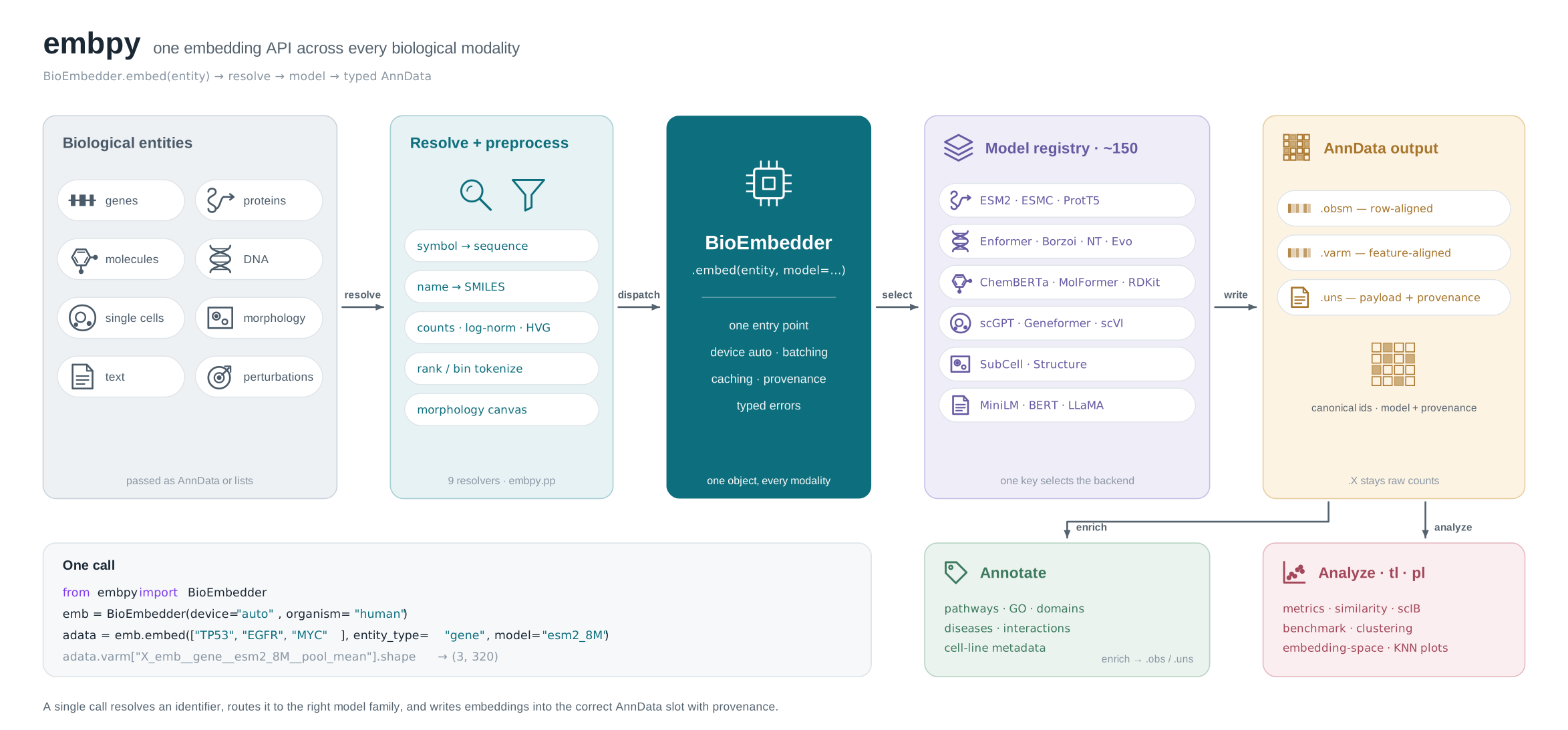
embpy relies on a highly modular architecture that isolates heavy dependencies, ensuring that the core package remains lightweight, responsive, and cross-platform.
The Embedder Protocol
At the heart of embpy is the BioEmbedder. It acts as a unified factory, instantiating and dispatching specific model wrappers based on the requested entity type and model name.
All underlying embedding wrappers inherit from the BaseModelWrapper interface:
class BaseModelWrapper:
    def load(self, device: torch.device):
        """Load tokenizer, weights, and move model to device."""
        pass

    def embed(self, sequences: list[str]) -> np.ndarray:
        """Execute forward pass and pool representations."""
        pass
Lazy Imports
Wrappers perform lazy imports of heavy frameworks (transformers, torch_geometric, rdkit, etc.) inside their respective .load() methods. This allows users to import embpy in fractions of a second without forcing large deep learning dependencies into process memory until needed.
Standardized Output Contracts
The .embed() method formats generated representations according to user specifications:
output="numpy"/output="tensor": Returns numerical matrices for standard data science workflows.output="anndata": Automatically aligns representations with.obsm(for observation/cell/molecule embeddings) or.varm(for feature/protein/gene embeddings), preserving metadata and dimensions.output="table": Returns a pandas DataFrame with canonical index identifiers.output="payload": Returns raw dictionaries with metadata, aliases, and provenance for downstream pipeline integration.
Adding a New Model
To integrate a new embedding model into embpy:
1. Subclass BaseModelWrapper in the appropriate modality module (src/embpy/models/).
2. Implement .load(device) using lazy imports for external libraries.
3. Implement .embed(inputs) returning pooled NumPy arrays or PyTorch tensors.
4. Register the model string identifier in the modality registry.